The infringement against Hungary: Behind the scenes
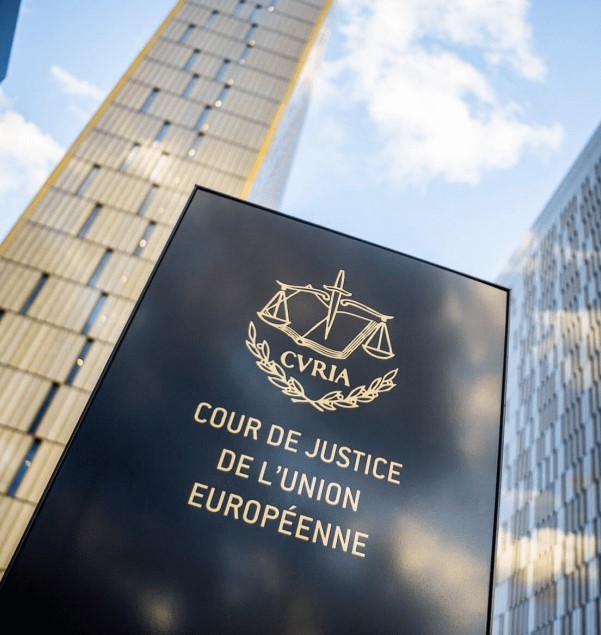
As the deadline for member states to decide whether they will join the European Commission’s lawsuit against Hungary for its introduction of anti-LGBTI legislation fast approaches, we look at the vital work ILGA-Europe has been doing behind the scenes to bring this case before the EU Court of Justice and to bring countries on board.
In June 2021, the Hungarian Parliament adopted a law that prohibits or limits access to content that portrays the so-called ‘divergence from self-identity corresponding to sex at birth, sex change or homosexuality’ for individuals under 18. On 15 July 2021, the European Commission began infringement proceedings against Hungary for its potential breach with this legislation of several rights in the Charter of Fundamental Rights of the European Union and fundamental EU values. Then, on 2 December 2021, the Commission sent a reasoned opinion stating that Hungary had failed to fulfil its obligations under various EU directives. As Hungary’s response to the reasoned opinion was unsatisfactory, the Commission referred the case to the CJEU.
Next Tuesday is the deadline for Member States to give their support to the case at the CJEU, and while more member states are signing on, some key member states have not done so, and we continue our efforts to bring them on board.
It may seem that the nine member states who have given their support to the case are doing so simply because the human rights of LGBTI people are at stake, but the journey to bring an infringement procedure to the courts and for any member state makes in supporting a case against another member state is complex and fraught with obstacles. That’s why the long-term work behind the scenes of organisations like ILGA-Europe, which represents the LGBTI movement in Europe, has been key to gaining support for this infringement.
As with any litigation at the EU Court of Justice, the infringement against Hungary is rooted in protecting the EU treaties and legislative framework. The risk that violations of human rights can be dismissed, due to the fact that they do not fall within EU competences, is high. This is why from the very beginning, we equipped EU member states with the detailed arguments on how this piece of legislation violates EU law and thus allowed them to strongly come out against the law in the European Council in June 2021, right after the adoption of the law.
It is another long journey from a political statement to actually intervening at the Court. Member states, who are always reluctant to go up against each other at the EU Court, need to be furnished with a clear way forward within the EU framework. For us that meant finding the right people within the government administrations, connecting to them, and showing them the ways in which Viktor Orbȧn’s anti-LGBTI law actually contravenes the laws of the European Union, which Hungary signed up to when it became a member state. It also meant us providing information about how member states can intervene at the Court and what needs to be in place to do so.
Putting the Pressure On
When the Hungarian law was first published, alongside one of our member LGBTI organisations in Hungary, Hatter, we invested heavily in working with member states, providing them with accurate information about the law and our assessment of it. Using this, we were able to keep pressure on member states to encourage the European Commission to go forward with an infringement procedure in the first place.
The Hungarian law clearly violates the human rights of LGBTI people, such as freedom of expression and in education, but the tricky issue with EU infringement is that you need to prove exactly how a law introduced by a member state actually goes against EU legislation. For example, in the area of education the EU has very little competence. So, we knew that infringement couldn’t be based on the education element of the Hungarian law. Together with Hatter, we analysed the law at a deep level to find exactly how it went against EU legislation.
When, encouraged by a letter from 17 member states, the Commission launched its infringement against Hungary, we hosted a meeting, bringing together key players from different member states, knowing it was vitally important that they were in touch with each other, so that they could support each other in making the arguments within their administrations to support the case. Alongside our analysis, we provided technical advice about how to intervene, what the deadlines would be, and so on.
Until the moment a member state has officially declared that they’re supporting a case, it’s a very fragile process and therefore we don’t want to talk about it on a public level. We simply work hard behind the scenes to give member states everything they need to prove to their own legal administrations that they can realistically go forward, and the information on how they can do so.
The story goes back a long way
Really, this work began long before the Hungarian anti-LGBTI law was introduced. Alongside our member organisations, we have been actively educating member states so they can see they have a proactive role to play on EU level in general, and more specifically in front of the CJEU for a long time. Back in 2018, when the Coman case came before the CJEU, seeking the extension of free movement rights to same-sex couples in the EU, we worked with ACCEPT, our member LGBTI organisation in Romania, to help prepare the case. Our further role was to establish contacts with member states, to raise their awareness of the case and what it entailed, and to encourage them to intervene.
More recently we worked in the same way with Bulgarian member organisations in helping prepare the Baby Sara case, in which the CJEU ruled that a parent in one EU country is a parent in all EU countries, and in bringing member states on board to intervene.
This is slow-burning, long-term work. It’s about building the awareness of member states of the legal contraventions involved, but also their own mechanisms to be ready to act within the often very short deadlines of the court. We have seen the leading role that the Netherlands has been playing in supporting the Commission in the infringement case against Hungary, and in reaching out to other member states. This is building on the fact that the Netherlands, encouraged and educated by ILGA-Europe alongside our member organisations, intervened in both the Coman and Baby Sara cases.
What happens if the infringement is successful?
It doesn’t end there, and nor does our work simply end if the infringement against Hungary is successful. When it’s done, we will begin our work behind the scenes to actually get the judgement implemented, which won’t be easy or immediate. Romania has yet to implement the CJEU judgement in the Coman case, which was decided upon five years ago. Bulgaria recently said it would not implement last year’s CJEU judgement in the Baby Sara case.
However, if the infringement is successful and Hungary still refuses to drop its anti-LGBTI law, which it is likely to do, this doesn’t mean the success of the case will have no immediate impact. Winning these cases means that EU legislation will strengthen the work of national organisations, and if other EU governments come up with similar legislation, which is not unthinkable, other member states will have a mechanism and framework with which to act.
At ILGA-Europe, we deal in the certainties of the law. We examine what a procedure is about and what it is not about, and we take our work from there. We’re in it for the long term behind the scenes, working towards our goal of freedom, safety and equality for all LGBTI people in Europe and Central Asia. If we pretended that a case that is really about EU competencies is a case about something else, such as human rights compliance, we would find ourselves in murky waters. And member states do not like murky waters. They like certainty, as do the European Commission and courts.