Joint statement: 27th of January, International Holocaust Remembrance Day

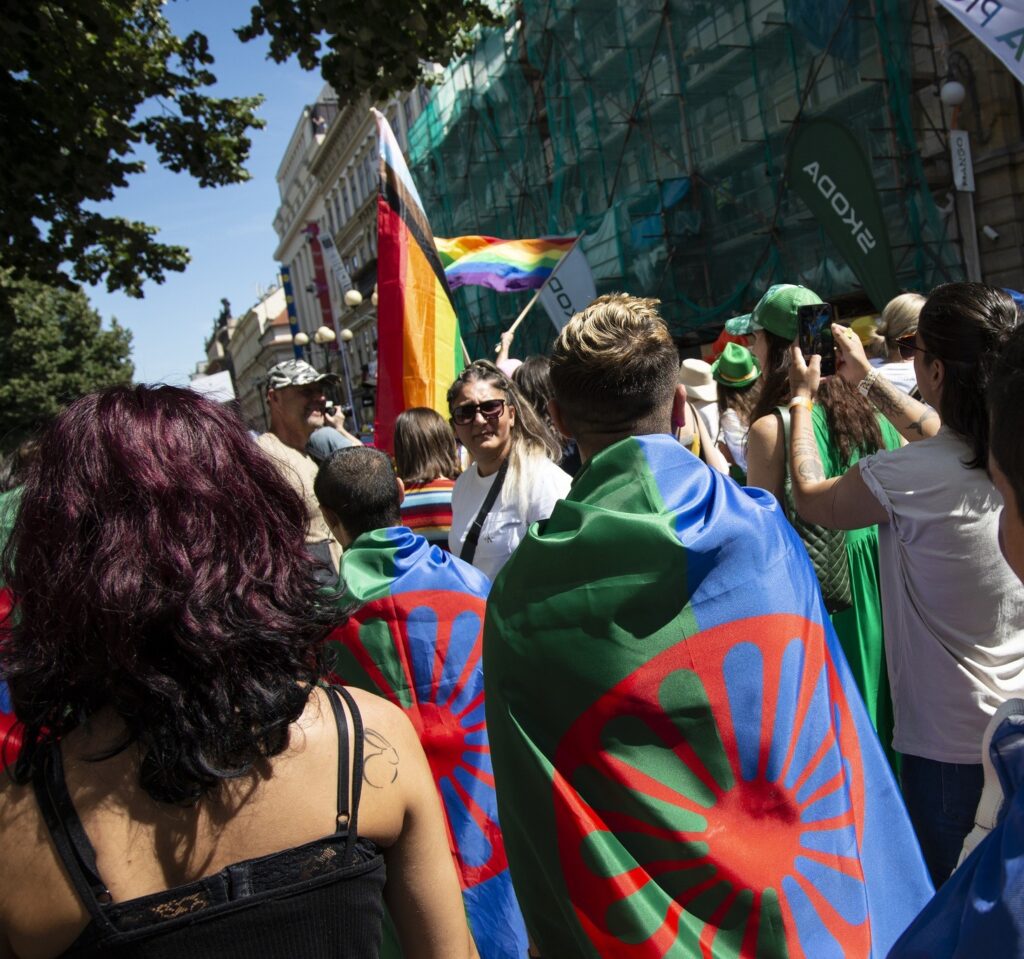
Every 27th of January, the world pays tribute to the memory of the victims of the Holocaust and reaffirms the unwavering commitment to counter antisemitism, antigypsyism, racism, and other forms of intolerance that may lead to group-targeted violence.

On International Holocaust Remembrance Day, ERGO NetworkILGA-EuropeVictim Support Europe (VSE) and the European Disability Forum (EDF) call on national governments and inter-governmental organisations to ensure the safety of all minorities who are targets for Europe’s extremists.

International Holocaust Remembrance Day reminds us of the millions of Roma, Jewish, lesbians, gays, intersex and transgender people, persons with disabilities, political opponents, Jehovah witnesses and other victims of the Holocaust. It is also a poignant date in the calendar to celebrate the lives of those who survived.

Simply remembering the Holocaust is no longer enough. States must ensure the protection of human rights and the security of citizens, regardless of their race or ethnicity, religion or belief, disability, sexual orientation or gender identity. Laws must be applied and enforced to prevent of the proliferation of racist and extremist ideologies which threaten harm to others.

The Holocaust took place because governments, institutions and civil society remained passive as prejudice, discrimination and hate flourished. Today is reminder to us all that the mistakes of the past should not be repeated.

Why is it celebrated every 27th of January?

On 1 November 2005, the United Nations General Assembly approved the designation of 27 January as the International Day of Commemoration in memory of the victims of the Holocaust.

The United Nations chose 27 January because it was on 27 January 1945 that the Soviet Army liberated the prisoners of the Auschwitz concentration camp.

The purpose of setting this date is to ensure that Member States develop educational programmes to show future generations the historical reality of the deplorable and repudiatory events of the Holocaust, in order to prevent future acts of genocide.
See also

Report

Intersections 2.0: Key Findings on LGBTIQ Health in Europe

In 2023, the European Union Agency for Fundamental Rights (FRA) conducted its third LGBTIQ survey, gathering responses from more than 100,000 LGBTIQ people across the […]
read more
Report

Intersections 2.0: Key Findings on Conversion Practices in Europe

For the first time, the European Union Agency for Fundamental Rights (FRA) included questions on conversion practices in its 2023 LGBTIQ III Survey. The survey […]
read more
Press Release

Press Release: New Report Highlights Hidden Homelessness Faced by LGBTI People in Europe

New cross-country findings show how systemic stigma and economic vulnerability push LGBTI people into hidden homelessness and long-term instability. Brussels, 21/11/2025 – A new report […]
read more
Blog

Black Sex Worker Collective: dismantling housing injustice, racism and whorephobia

In Germany, new research carried out by Black Sex Worker Collective sheds light on how queer identity, migration status, race and sex work intersect to […]
read more
Blog

La Bassa Mar, a rural refuge of queer racialised power

In the Catalonian countryside, a trans-led sanctuary is centering community, healing, and sustainability as acts of resistance. “In most European countryside places, Black and Brown […]
read more
Blog

No borders, just beats: Temple Of’s sonic rebellion

Built by queer immigrants reclaiming joy and cultural memory, Temple Of is a collective transforming resistance into celebration through sound and care. “We are a […]
read more
Blog

“Healing in motion”: How one LGBTI mental-health organisation is reclaiming self-care

Rainbow Mind’s radical self-care programme invites queer people of colour to reclaim their joy as a political, creative, and collective act. But what is radical […]
read more
Blog

The healing power of gathering for queer Africans in Austria

A conversation with Afro Rainbow Austria on why shared physical spaces are essential for healing, connection, and collective strength. “You can’t know what it means […]
read more
Blog

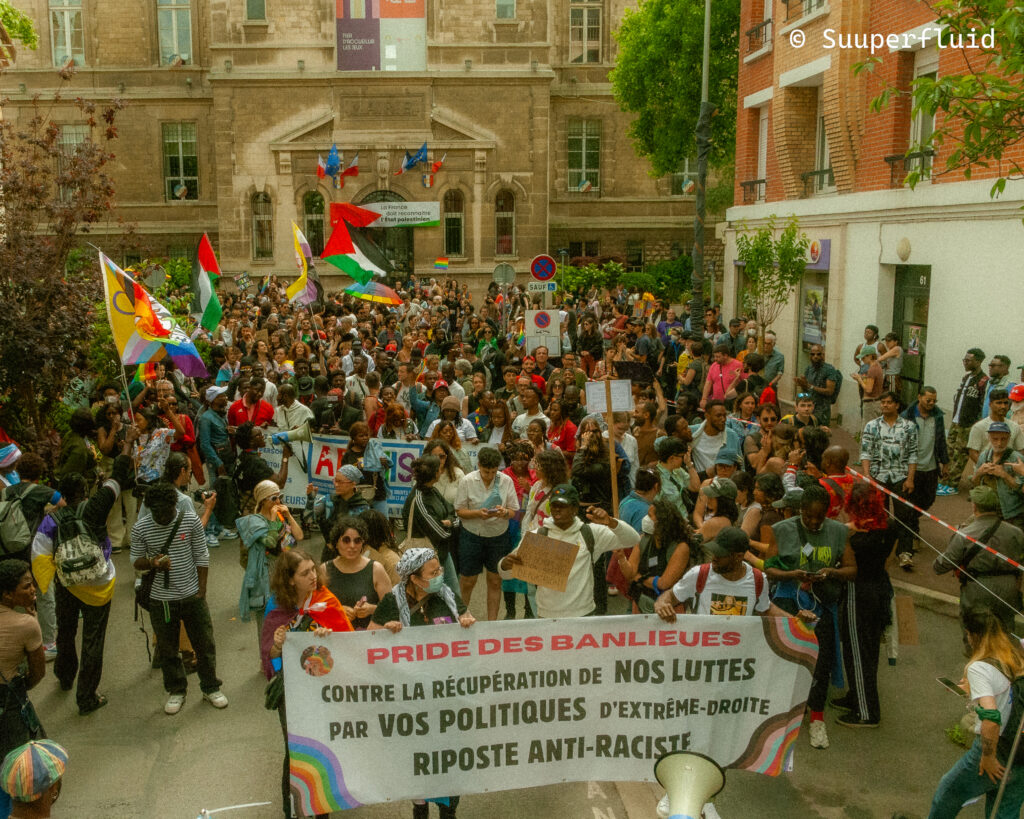
Pride as a force of collective power

Born from the fight against police violence and rooted in the struggles of marginalised communities, Pride des Banlieues is reclaiming Pride as a space of […]
read more
Blog

Why the threat to scrap a long-delayed EU Directive threatens LGBTI Roma rights

As the EU considers cancelling a crucial anti-discrimination measure, LGBTI Roma are vulnerable to even greater marginalisation. On International Roma Day, we’re mobilising people power […]
read more
Blog

How BIPOC queer activists are using artivism as resistance

Art has always been a powerful tool of resistance, allowing the oppressed to share their truths and experiences. For many Black, Indigenous, or People of […]
read more
News

Call for project proposals: Working with racialised LGBTI communities towards justice (2025-2026)

Why we launch this call In 2023, ILGA-Europe launched a new programme focused on work done by and for racialised LGBTI communities. In 2024, we […]
read more
Blog

Remarkable and resilient Prides across Europe

Amid political turmoil, war, social issues and cultural changes, Pride celebrations in Europe continue to demonstrate the resilience and determination of LGBTI communities Today, on […]
read more
Podcast

The Frontline: Intersectionality in the LGBTI movement

Intersectionality is a buzzword that’s often used, but what is true intersectionality and how do we fold it into the work of the LGBTI activist […]
read more
Blog

6 ways ILGA-Europe practice intersectionality

Over the past decade, ILGA-Europe has embarked on a learning journey to become an organisation that genuinely adopts an intersectional approach in all its work. […]
read more
Blog

Roma and LGBTI: A spotlight on lived experiences

Today, as we mark International Roma Day, we celebrate a diversity of voices within the Roma LGBTI community, revealing the resilience, strength, and beauty of […]
read more
Blog

Future visions: 7 LGBTI groups working for racial justice and equity

In this blog, marking International Day for the Elimination of Racial Discrimination, seven of our partner organisations share their aspirations, visions, and messages for the […]
read more
News

Call for project proposals working with racialised LGBTI communities

Why we launch this call Last year, ILGA-Europe launched a new programme focused on work done by and for racialised LGBTI communities. With this call, […]
read more
Report

Intersections: The LGBTI II Survey – Persons with Disabilities Analysis

Disaggregated data, which can look deeply into the lived experiences of marginalised people, is a key demand of LGBTI and other human rights groups. With […]
read more
Report

Intersections: The LGBTI II Survey – Bisexuals Analysis

Disaggregated data, which can look deeply into the lived experiences of marginalised people, is a key demand of LGBTI and other human rights groups. With […]
read more
Report

Intersections: The LGBTI II Survey – Migrant and Racial, Ethnic and Religious Minorities Analysis

Disaggregated data, which can look deeply into the lived experiences of marginalised people, is a key demand of LGBTI and other human rights groups. With […]
read more
Report

Intersections: The LGBTI II Survey – Trans and Non-binary Analysis

Disaggregated data, which can look deeply into the lived experiences of marginalised people, is a key demand of LGBTI and other human rights groups. With […]
read more
Report

Intersections: The LGBTI II Survey – Intersex Analysis

Disaggregated data, which can look deeply into the lived experiences of marginalised people, is a key demand of LGBTI and other human rights groups. With […]
read more
Report

Intersections: The LGBTI II Survey – Older People Analysis

Disaggregated data, which can look deeply into the lived experiences of marginalised people, is a key demand of LGBTI and other human rights groups. With […]
read more
News

Call for project proposals: Addressing LGBTI homelessness in the EU

Why we are launching this programme In 2020, the Fundamental Rights Agency (FRA) released a survey that estimates that one in five members of the […]
read more
Report

Intersections: The LGBTI II Survey Analysis project

Disaggregated data, which can look deeply into the lived experiences of marginalised people, is a key demand of LGBTI and other human rights groups. With […]
read more
Video

Our Latest Call for Project Applications: Video Explanations

What kinds of organisations can apply? What do we mean when we say ‘racialised’? What types of work can you apply for support for? What […]
read more
News

New Call for Applications for Projects Working with Racialised LGBTI Communities

Why we are launching this programme Currently, the LGBTI movement across Europe operates in an increasingly hostile environment that directly affects the lives of LGBTI […]
read more
Report

Intersections: The LGBTI II Survey – Youth Analysis

Disaggregated data, which can look deeply into the lived experiences of marginalised people, is a key demand of LGBTI and other human rights groups. With […]
read more
Report

Intersections: The LGBTI II Survey – Lesbians Analysis

Disaggregated data, which can look deeply into the lived experiences of marginalised people, is a key demand of LGBTI and other human rights groups. With […]
read more